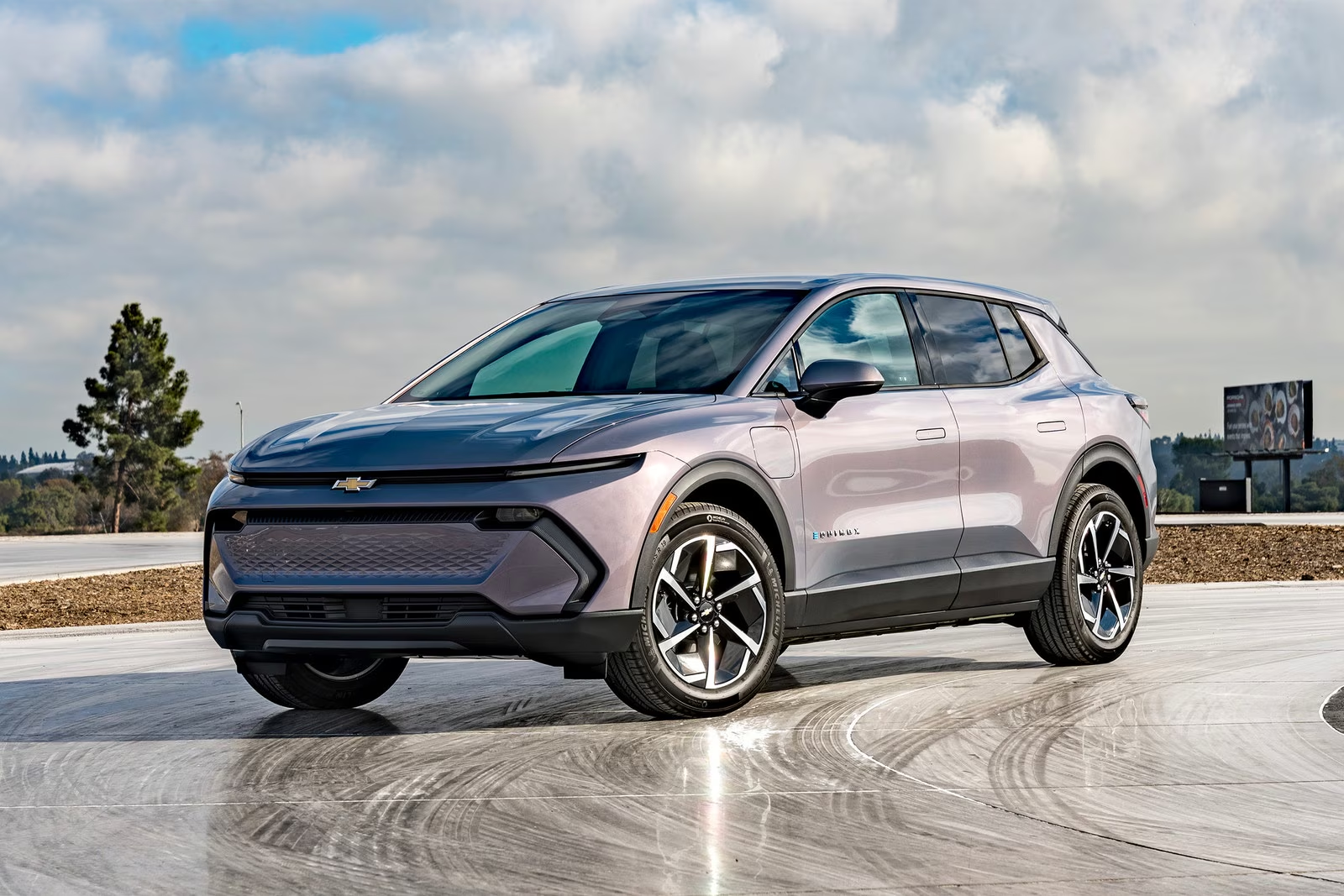
2026 Chevrolet Equinox EV: Value Meets Range
What if your next winter-ready family hauler didn’t use a drop of gas?
The 2026 Chevrolet Equinox EV arrives with a simple promise: familiar compact-SUV practicality, now powered by electrons. For Alberta drivers who juggle frigid winters, long highway stretches, gravel access roads, and family schedules, Chevy’s most affordable Ultium-based SUV could be the EV that finally makes sense—without the luxury price tag. Let’s unpack how it fits real Alberta life, from -30°C starts to weekend trips, home charging, total cost of ownership, and smart ways to buy.
Why the Equinox EV matters in Alberta
Most Albertans don’t drive EVs to make a point—they do it to save money and simplify life. The 2026 Equinox EV leans hard into that practicality:
- Approachable price point: Positioned as Chevy’s value-forward electric SUV, it’s built to attract drivers who would normally shop gas compact crossovers.
- Real-world range: Chevy guidance suggests configurations with up to roughly the high-400s to 500+ km of range on a full charge, depending on trim, battery, wheels, and drive type. Always verify final Canadian NRCan figures for your specific build.
- Available AWD: Optional all-wheel drive adds winter confidence for Alberta highways and rural roads.
- Ultium platform: GM’s latest EV architecture prioritizes efficiency, quick charging, and thermal management—key for cold-weather reliability.
Translation: it’s built to slot right into daily Alberta life, whether your routine includes school runs, highway commutes, or hauling hockey gear.
Key specs at a glance (what to expect)
- Power: Single-motor FWD or dual-motor AWD configurations; output varies by trim. Expect roughly 200–300 hp range depending on setup.
- Range: Depending on wheel size, trim, and drivetrain, up to the ~480–500+ km zone is anticipated on select versions. Confirm NRCan ratings for the exact model you’re considering.
- Charging: DC fast-charging capability designed to add substantial range in minutes when connected to a high-power charger; home Level 2 charging (240 V) recommended.
- Towing: Light towing expected (commonly up to about 680 kg/1,500 lb on similar compact EVs). Verify the official rating and required equipment for your trim.
- Warranty: GM EVs in Canada typically include an 8-year/160,000 km battery warranty; confirm the 2026 policy details when you buy.
Note: Final Canadian specs and pricing can change by trim and year. Always check the window sticker or build sheet for your vehicle.
Pricing, incentives, and taxes: the Alberta angle
One of Alberta’s quiet advantages? No provincial sales tax. You still pay GST (5%), but skipping PST helps stretch your EV budget. Here’s how the math tends to look:
- MSRP expectations: The Equinox EV is positioned as one of Chevy’s most affordable EVs. Expect pricing to land in the low-to-mid $40,000s CAD for base configurations, with higher trims rising from there. Check for Canada-specific pricing as order banks open for 2026 cars.
- Federal iZEV incentive: Historically up to $5,000 on eligible EVs under price caps. Availability and rules can change—confirm eligibility for your specific trim at time of purchase.
- Fees and extras: Factor in freight/PDI, documentation fees, tire levies, and home charging setup.
If incentives apply, many dealers process them at the point of sale so you don’t wait for a rebate. Not sure what you qualify for? When you finance through a marketplace that knows EVs, they’ll help you navigate iZEV program details and ensure paperwork is handled correctly.
Charging in Alberta: what it really costs
Alberta’s deregulated electricity market means your cost per kWh varies by provider and plan. As a planning baseline:
- Typical home rates: Many households see effective electricity costs in the $0.12–$0.22/kWh range depending on provider and fixed/variable plan. Check your latest bill.
- Equinox EV efficiency: Expect around 18–22 kWh/100 km in mild weather; winter can push that higher.
At $0.15/kWh and 20 kWh/100 km, you’re paying about $3.00 per 100 km in mild weather. In winter at -20°C to -30°C, consumption can rise by 20–40%, so budget $4.00–$6.00 per 100 km for the coldest stretches—still usually far less than gasoline.
Home charging setup
- Level 2 (240 V) recommended: A 40 A circuit with a 32–40 A EVSE is a common, cost-effective setup that can add roughly 30–40+ km of range per hour.
- Install costs: Many Alberta homeowners see $800–$2,000 for a straightforward install. Complex panels, long wire runs, or trenching will add cost.
- Condo/townhome living: You’ll need board/landlord approval and possibly a load-management plan. Alberta law doesn’t mandate EV infrastructure in multifamily buildings; start the conversation early.
Tip: Ask your electrician about load management if your panel is near capacity—you might avoid a pricey service upgrade. And check with your local utility for any emerging EV charging pilot programs or off-peak pricing.
Public charging across the province
For road trips, Alberta’s main corridors—Trans-Canada, Yellowhead, and QEII—have growing DC fast-charging coverage from networks like Petro-Canada, FLO, Shell Recharge, and others. Plan routes with PlugShare or your in-car navigation, and expect charging speed to be slower in deep cold. GM has announced a transition to the NACS standard for charging access; 2026 models may include native compatibility or provide adapters. Confirm the plug standard and included accessories for your specific Equinox EV.
Winter in Alberta: cold-weather facts and fixes
EVs face two winter realities: batteries are less efficient in the cold, and cabin heating draws extra energy. The Equinox EV counters this with a modern thermal management system, but smart habits matter:
- Precondition while plugged in: Warm the cabin and battery before you depart to boost range and charging speed. Use the app or schedule it.
- Use heated seats/steering wheel: They sip power compared to blasting the cabin heater.
- Keep your charge window healthy: Try to arrive at a DC fast charger with 10–30% state of charge in winter so the battery warms effectively and accepts faster rates.
- Tires matter: Choose 3PMSF-rated winter tires sized correctly for your trim. Consider downsizing wheel diameter for better winter performance and efficiency.
- Snow traction: AWD helps you get moving; good winter tires help you stop and turn. Both beat raw horsepower when roads glaze over.
Range hit in deep cold? Plan for 20–40% reduction on frigid days, especially for highway slogs into a headwind. It’s normal—and manageable if you start charged and plan your stops.
Road-trip reality: how the Equinox EV fits
Alberta road trips often mean long distances at steady highway speeds, with wind and elevation changes that tax any EV. Here’s how to set yourself up for success:
- Pick the right trim: If you’ll do frequent 300–400 km legs, favour longer-range wheels/tires and trims. Big wheels look great but usually shave range.
- Mind your speed: Aerodynamic drag spikes fast above 110 km/h. Slowing 5–10 km/h can add meaningful range.
- Plan A and Plan B chargers: Rural sites can be busy or offline. Always have a backup.
- Arrival charge target: Aim to reach high-power chargers at 10–30% SOC for the quickest turnarounds.
- Cargo and racks: Roof boxes and bikes notably cut range. If possible, use a hitch rack and pack light.
Equinox EV vs the usual suspects
Shoppers in Alberta eye a familiar field: Hyundai Kona Electric, Kia Niro EV, Volkswagen ID.4, and a growing pool of used Tesla Model Y listings. Where the Equinox EV aims to win:
- Affordability: Positioned to undercut many rivals on MSRP while offering competitive range.
- AWD availability: Not all compact EVs offer it at value pricing; the Equinox EV’s AWD option is big for winter roads.
- Ultium ecosystem: GM’s platform centralizes parts and software, which should help with long-term support and serviceability.
Potential trade-offs? Depending on trim, the Equinox EV might tow less than some midsize rivals and—like most EVs—can see notable winter range drop. Always compare the exact trims you plan to cross-shop.
Towing, gear, and family duties
Expect light towing (verify the official rating for your 2026 trim), enough for a small utility trailer or pair of snowmobiles on a lightweight rig. Remember:
- Range impact: Towing or carrying bikes/skis on the roof can cut range significantly. Plan charging stops accordingly.
- Thermal load: In winter, towing plus cabin heat can push consumption higher. Keep an eye on your predicted range in the cluster.
- Hitch setup: Ensure your Equinox EV is equipped with the correct hitch package and wiring to keep warranty coverage intact.
Buying tips for Alberta shoppers
1) Choose the right drivetrain
FWD will suit many drivers who prioritize range and price. AWD is worth it if you frequently face unplowed roads, gravel, or icy highways. Pair either with quality winter tires.
2) Pick wheels for function, not just form
Larger wheels often reduce range and bump winter tire costs. If efficiency and winter grip are priorities, consider the smaller wheel option.
3) Right-size your range
Do an honest week of driving logs. If your typical day is 120–200 km with occasional 400+ km days, a longer-range trim may pay off in convenience and time saved at chargers.
4) New vs. used Equinox EV
- New (2026): Latest software, potential NACS-native charging hardware, full warranty coverage.
- Lightly used (earlier model years): Savings on purchase price; confirm battery health and any software updates. Ask for a state-of-health report where available.
For used purchases, run the VIN through Transport Canada’s recall database and request service records. A pre-purchase inspection from an EV-savvy technician is money well spent.
5) Insurance and registration in Alberta
- Insurance: Rates vary by driver record and postal code; EVs don’t automatically cost more. Ask about parts/labour assumptions and glass coverage (gravel roads can be tough on windshields).
- Registration: Standard provincial processes apply—no EV-specific surcharges as of writing. Keep an eye on any future updates to road-use fees.
6) Total cost of ownership math
Assume 20,000 km/year. At $0.15/kWh and 20 kWh/100 km, energy costs are about $600/year in mild conditions. Add winter overhead and you might land around $750–$900. Compare that to a 9.0 L/100 km gas SUV at $1.45/L: roughly $2,610/year. Even after adding winter tires and a home charger, many Alberta drivers come out well ahead within a few years.
Financing and smarter ways to shop
EV purchases come with a few paperwork wrinkles—especially if you’re exploring incentives and comparing new versus lightly used inventory. That’s where a flexible marketplace helps.
At Driving With Us Auto Market, we stock both new and used vehicles and run an open marketplace that connects Alberta buyers with private sellers. That means:
- One-stop comparison: Cross-shop new 2026 cars and used Equinox EV listings side by side—whether they’re dealership vehicles or private seller cars Alberta drivers are listing.
- Financing for all paths: We provide vehicle financing Canada-wide for both dealership and private sale transactions, and help ensure any eligible incentives are applied properly.
- Protection and transparency: We can coordinate third-party inspections for private sales and guide you on EV-specific warranties and service plans.
Whether you’re browsing “new and used cars Edmonton” or searching province-wide in a car marketplace Alberta shoppers trust, an open car marketplace lets you see more options and act quickly when the right Equinox EV appears.
Search tips to find the right Equinox EV
- Use filters for drive type (FWD vs AWD), wheel size, and range estimates.
- Check warranty status on used listings—especially battery and high-voltage components.
- Request a charging history snapshot if available; frequent fast charging isn’t a deal-breaker, but balanced use is ideal.
- Ask for details on included charging adapters and confirm plug standard compatibility for your routes.
Pro move: Save searches for “2026 cars,” “new car models,” “car releases,” and “latest vehicles Alberta” so new Equinox EV listings (and rivals) hit your inbox fast. You’ll also see adjacent searches like “auto sales Edmonton,” “vehicle marketplace Edmonton,” and “new cars Edmonton”—useful SEO terms you’ll bump into even if you’re shopping across the whole province.
Living with the Equinox EV day to day
Charging routine
Most owners will charge overnight to 80–90% for battery longevity and top up to 100% before longer trips. Schedule charging for off-peak hours if your plan discounts nighttime rates.
Maintenance
- Brakes: Regenerative braking means pads and rotors can last longer, but Alberta’s road salt still demands seasonal inspections.
- Tires: EV torque is tough on rubber; rotate on schedule and consider EV-rated all-seasons plus dedicated winters.
- Coolant/thermal systems: Follow the EV maintenance schedule—thermal systems are the heart of cold-weather performance.
- Software: Keep updates current; they can meaningfully affect range estimations and charging behaviour.
Battery health over time
Lithium-ion batteries do age, but modern thermal management helps. In Alberta’s climate, avoid extended parking at 0% or 100% state of charge in extreme temperatures. A balanced daily window (20–80%) is a good rule of thumb.
FAQs: Alberta-focused answers
How does the Equinox EV handle -30°C?
Expect a noticeable range drop in deep cold, but preconditioning, AWD traction, and quality winter tires make it viable for daily use. Plan charging buffers on the coldest days.
How much does it cost to charge at home?
At $0.15/kWh and 20 kWh/100 km, around $3 per 100 km in mild weather. Budget more in winter. Your exact cost depends on your electricity plan.
Can I install a charger in a condo?
Yes—with board approval and a compliant plan for power allocation. Start early, document load calculations, and propose a metered or managed solution.
Does it qualify for federal incentives?
Many Equinox EV trims are expected to meet iZEV criteria, but eligibility depends on final Canadian MSRP caps and trim specifics. Confirm at purchase time.
What about long trips across Alberta?
Plan routes with known DC fast chargers along major corridors. In winter, pad your range and arrive with a lower SOC to charge faster.
Final take: Is the 2026 Equinox EV the Alberta sweet spot?
If you’ve been waiting for an EV that balances value, range, and everyday usability, the 2026 Chevrolet Equinox EV deserves a top spot on your list. It’s poised to deliver the affordability Canadians want, with the winter readiness and road-trip practicality Albertans need. The key is matching trim, wheels, and charging strategy to your real life—and comparing both new and lightly used options to find the best fit.
Ready to shop? At Driving With Us Auto Market, you can compare new and used Equinox EVs, browse private listings on our open marketplace, and secure financing for dealership or private-sale purchases—all in one place. That way, you spend less time chasing paperwork and more time enjoying lower running costs on Alberta roads.