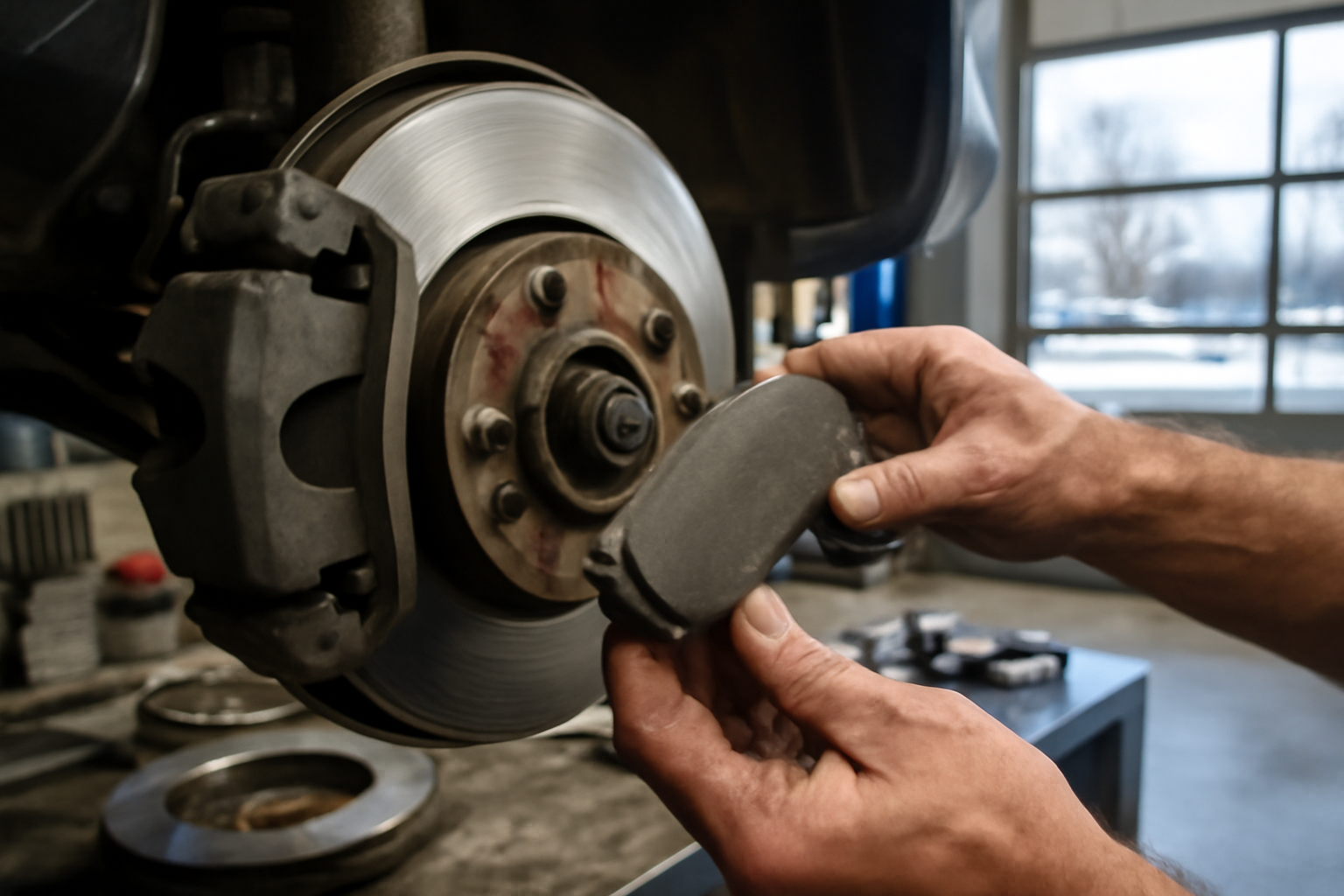
Brake Pads vs Rotors: An Alberta Driver’s Playbook
Do your brakes sound different after a cold snap?
That faint squeal on a frosty morning, a steering wheel shimmy on the highway, or a longer-than-usual stop in traffic—your brake system is sending signals. In Alberta, where winter brings deep cold, road salt, gravel, and constant freeze-thaw cycles, brake pads and rotors live a harder life than most. Knowing when to replace pads versus rotors isn’t just a wrench-turner’s debate; it’s money saved, safety improved, and confidence restored—especially if you’re shopping for your next vehicle or planning a road trip through mountain grades.
Brake System 101: Pads vs. Rotors, explained simply
Your brakes convert motion into heat. Press the pedal, hydraulic fluid pushes caliper pistons, pads clamp the rotors (the shiny discs you see through the wheels), and friction slows you down. Pads are wearing parts; rotors wear too, but more slowly—unless heat, rust, or grit accelerate that wear.
- Brake pads: Friction material bonded to a backing plate. Common types: semi‑metallic (great cold bite, more dust/noise), ceramic (quieter, less dust, gentler on rotors), low‑metallic NAO (middle ground).
- Rotors (discs): Solid or vented iron discs. Some are “drum-in-hat,” housing a small parking brake drum. Performance versions may be slotted or drilled, but in Alberta’s salted roads, drilled rotors can be prone to cracking over time.
Why brakes wear faster in Alberta
- Cold starts: Friction materials can be less effective until warmed; semi‑metallic pads often have better cold bite.
- Road sand/gravel: Acts like sandpaper between pads and rotors, etching surfaces and speeding wear.
- Salt and brine: Accelerates rust on rotor faces and hubs; corrosion leads to uneven pad contact and pulsation.
- Freeze-thaw/potholes: Wheel impacts can loosen hardware and contribute to rotor runout.
- Mountain grades/towing: Long descents and trailers generate heat; heat cycles harden pads and can cause rotor thickness variation.
When to replace brake pads
Pads usually go first. Replace if you notice:
- Thickness at or below ~3 mm: New pads are typically 10–12 mm. At 6 mm, plan; at 3 mm or less, replace soon.
- Squeal or chirp: Many pads have a wear indicator tab that screeches when the pad is thin, especially on cold starts.
- Grinding: Metal-on-metal means the pad is gone and the rotor is likely damaged—replace both.
- Pulling or uneven braking: Could be a seized caliper slide or uneven pad wear; inspect hardware and both sides of the axle.
- Warning light: Some vehicles use electronic pad sensors; don’t ignore the dash message.
Pad choices for Alberta driving
- Semi‑metallic: Strong cold performance, good for winter and towing; may dust more and make light noise.
- Ceramic: Quiet, low dust, gentle on rotors; excellent for daily commuting but ensure a quality brand for consistent cold bite.
Tip: Ask for a hardware kit (clips, shims) with every pad job. Salted roads corrode hardware; fresh clips help pads move freely and wear evenly.
When rotors need attention
Rotors don’t always need replacing with every pad set, but they do need replacing when they’re worn, damaged, or too rusty. Watch for:
- Pedal pulsation: Often felt as a rhythmic pulse under braking. Usually rotor thickness variation or rust high spots.
- Steering wheel shimmy under braking: Commonly points to front rotor issues or wheel bearing play.
- Deep grooves or scoring: Gravel and worn pads can gouge rotors beyond machining limits.
- Blue/purple heat spots: Evidence of overheating and hard spots—often a replacement, not a resurface.
- Rust lip or flaking: Alberta salt can pit the friction surface; if pitting is heavy or the braking area is narrowed by rust lips, replace.
- Below minimum thickness: The minimum is cast into the rotor hat (e.g., “MIN TH 22.4 mm”). If measured below—or too close to be safe after machining—replace.
How to check your rotors at home
- Shine a light through the wheel spokes; look for smooth, uniform surfaces without deep grooves.
- Run a fingertip lightly over the edge (when cool). A pronounced lip suggests significant wear.
- If you have a micrometer or dial indicator, check thickness at multiple points and lateral runout; otherwise, ask a shop at the next tire rotation.
Pads only, rotors only, or both?
Use this quick decision guide:
- Replace pads only if rotors are smooth, within thickness spec, no pulsation, and no heavy rust or hotspots. Light glazing can often be corrected with proper bedding-in of the new pads.
- Replace rotors and pads if you feel pulsation, see heavy grooves, rust pitting, or heat spots; if rotors are at/near minimum thickness; or if the old set was metal-on-metal.
- Resurface rotors only when thickness allows and the surface issues are minor. In Alberta, corrosion often makes replacement the better long-term call.
Important: Any time you install new pads on older rotors, you’re asking the pad to conform to the rotor’s existing surface. If that surface is uneven, you may get noise or reduced pad life. Balanced judgment—and a thickness measurement—matters.
Resurface vs. replace: what makes sense here?
Machining (resurfacing) can restore a flat surface, but it also removes material, bringing the rotor closer to its minimum. Because many modern rotors are relatively affordable and Alberta corrosion is tough to machine out cleanly, replacing rotors is often the practical choice, especially on family vehicles and work trucks.
Resurface when:
- Rotor is thick enough to remain above “MIN TH” after machining.
- Issues are light grooves or minor runout without heavy rust.
- You’re pairing with quality pads and performing a proper bed-in.
Replace when:
- There’s pulsation from thickness variation, heat spots, or cracking.
- Corrosion has undercut the braking surface or the cooling vanes.
- There’s a pronounced rust lip or flaking at the edge.
- You’ve had metal-on-metal contact.
DIY, shop visit, or dealership?
Alberta drivers who rotate their own winter/summer sets often inspect pads while the wheels are off. DIY pad and rotor jobs are doable with the right tools, but be honest about safety and time in cold weather.
- DIY tips: Use jack stands on a flat surface, clean and lube caliper slides with high-temp brake grease, wire-brush hub faces, and torque wheels to spec to prevent rotor runout. Never compress a caliper piston without opening the reservoir or a proper rewind tool (especially for electric parking brakes).
- Professional service: A qualified shop will measure rotors, check hose condition, verify parking brake operation (important with drum-in-hat rotors), and scan ABS if warning lights are present.
Brake fluid: the forgotten Alberta winter item
Brake fluid is hygroscopic—it absorbs moisture. Moisture lowers the boiling point, increases internal corrosion, and can wreck ABS components. In our climate, consider:
- Interval: Test at 2 years and flush by 3 years, or sooner if moisture content is high. Use the DOT rating specified in your owner’s manual (often DOT 3 or DOT 4).
- Storage: Keep containers sealed; Alberta’s humidity swings introduce moisture quickly.
- Signs: Dark, murky fluid or a soft pedal after repeated stops can indicate fluid problems (or air in the system).
After any brake job: bed the pads properly
New pads and rotors need a controlled heat cycle to lay down an even transfer layer:
- Make 5–7 moderate stops from ~60 to 10 km/h without coming to a full stop; allow airflow between each.
- Make 2–3 firmer stops from ~80 to 20 km/h.
- Drive for 10 minutes to cool. Avoid hard panic stops for the first 300 km unless needed for safety.
This process reduces judder and noise, especially on fresh rotors.
Costs in Alberta: what to budget
Prices vary by vehicle type, parts quality, and shop rates, but these ballparks help with planning:
- Front or rear pads only: ~$200–$350 per axle installed; premium ceramics can cost more.
- Pads and rotors: ~$350–$650 per axle on many cars and crossovers.
- Trucks/SUVs, towing setups, performance brakes: ~$450–$900 per axle.
- Fluid flush: ~$100–$180.
Quality matters. Cheap pads may glaze in cold weather or squeal on grooved rotors. Opt for reputable brands, especially if your driving includes long winter commutes or towing.
Alberta-specific brake care checklist
- Inspect brakes with every seasonal tire swap; photograph pad thickness for your maintenance records.
- Clean and lube caliper slide pins annually; road salt dries out rubber boots.
- Wash wheels and brakes after heavy salt exposure; a quick spray reduces corrosion.
- Use engine braking on long grades to reduce heat load on rotors.
- Torque wheels properly after tire changes; uneven torque can create rotor runout and pulsation.
Shopping for a vehicle? Read the brakes like a pro
Whether you’re browsing new and used cars Edmonton shoppers are posting or scanning an open car marketplace across the province, you can screen brake health before you even book a test drive:
- Photos: Look through the wheel spokes—do rotors look smooth? Big rust lips or heavy scoring suggest imminent work.
- Service records: Ask for dates and mileage of last pad/rotor service and any fluid flushes or caliper replacements.
- Test drive: From 80 km/h, brake gently and feel for pulsation; brake moderately and listen for squeal or grind.
- Parking brake: On a gentle incline, engage it and ensure it holds; sticking parking brake shoes are common in salty climates.
If you’re buying privately, a pre-purchase inspection that measures pad thickness and rotor runout is cheap insurance. Driving With Us Auto Market supports buyers across Alberta on both dealer and private-sale transactions, and our open marketplace connects you with private seller cars Alberta-wide. When you find the right ride, we can also help you get pre-approved so you can budget for any immediate maintenance like pads and rotors.
Budgeting and financing brake repairs without stress
Brakes aren’t a “nice-to-have.” If a sudden repair pops up right after purchase, you’ve got options:
- Rolling small repairs into purchase financing can smooth cash flow—especially if you’re new to the province or rebuilding credit.
- Explore flexible terms, including $0 down car loans, if savings are tied up in winter prep.
- If your search includes dealership and private-sale vehicles, our team can structure solutions for both—part of why Alberta buyers use us as a car marketplace Alberta resource.
- Credit not perfect? We work with lenders who understand real life in Alberta; learn about options for bad credit car loans.
Shopping across regions? We also assist with location-specific needs like auto financing in Edmonton, while keeping the process straightforward for drivers anywhere in the province.
Common myths, busted
- “Pulsation means warped rotors.” Often it’s thickness variation or pad material transfer from improper bedding—not literal warping.
- “All drilled/slotted rotors stop faster.” On street cars in Alberta, good quality plain vented rotors and the right pad compound are more important than fancy patterns.
- “Ceramic pads always last longer.” Not always. Driving style, temperature, and rotor condition impact life. Cold bite and quality vary by brand.
What to ask your shop
- What’s my pad thickness (mm) and rotor thickness versus minimum?
- Is there any caliper sticking or slide pin seizure?
- Condition of brake fluid and when it was last flushed?
- Are the rotors within runout spec after wheel installation and proper torque?
- What’s the parts warranty and labour coverage, especially with winter use?
If you’re still shopping for a vehicle
Looking at dealer inventory and private listings? At Driving With Us Auto Market, we help Albertans compare options across new and used inventory and our open platform for private sellers. It’s a simple way to weigh total cost of ownership—purchase price, insurance, winter tires, and realistic brake maintenance—before you commit. Whether you’re browsing auto sales Edmonton drivers are posting or casting a wider net, our goal is to make the numbers clear so you can choose confidently. And if you need a hand lining up terms nationwide, we support vehicle financing Canada‑wide for both dealership and private sale transactions.
Quick reference: replace pads vs rotors
- Replace pads when they’re ≤3 mm, screeching, or wearing unevenly—assuming rotors are smooth and within spec.
- Replace rotors and pads when you have pulsation, deep grooves, heavy rust, heat spots, or you went metal-on-metal.
- Flush fluid every ~2–3 years; sooner if moisture content is high.
- Inspect every tire swap; photograph and record measurements.
Final thoughts
Your brakes are the most important safety system on your vehicle. In Alberta’s demanding climate, a little attention—seasonal inspections, the right pad choice, and smart decisions about rotors—pays back in shorter stops, quieter commutes, and fewer surprises. Whether you’re maintaining your current ride or evaluating listings on a vehicle marketplace Edmonton drivers use, use this guide to separate “must-do now” from “plan soon.” And if you’re lining up your next purchase, you can get pre-approved early so the budget covers safety items like pads and rotors from day one.
Need a straightforward place to compare options? Driving With Us Auto Market brings Alberta buyers and sellers together—dealers and private owners—so you can find the right fit, keep maintenance in check, and enjoy the drive.