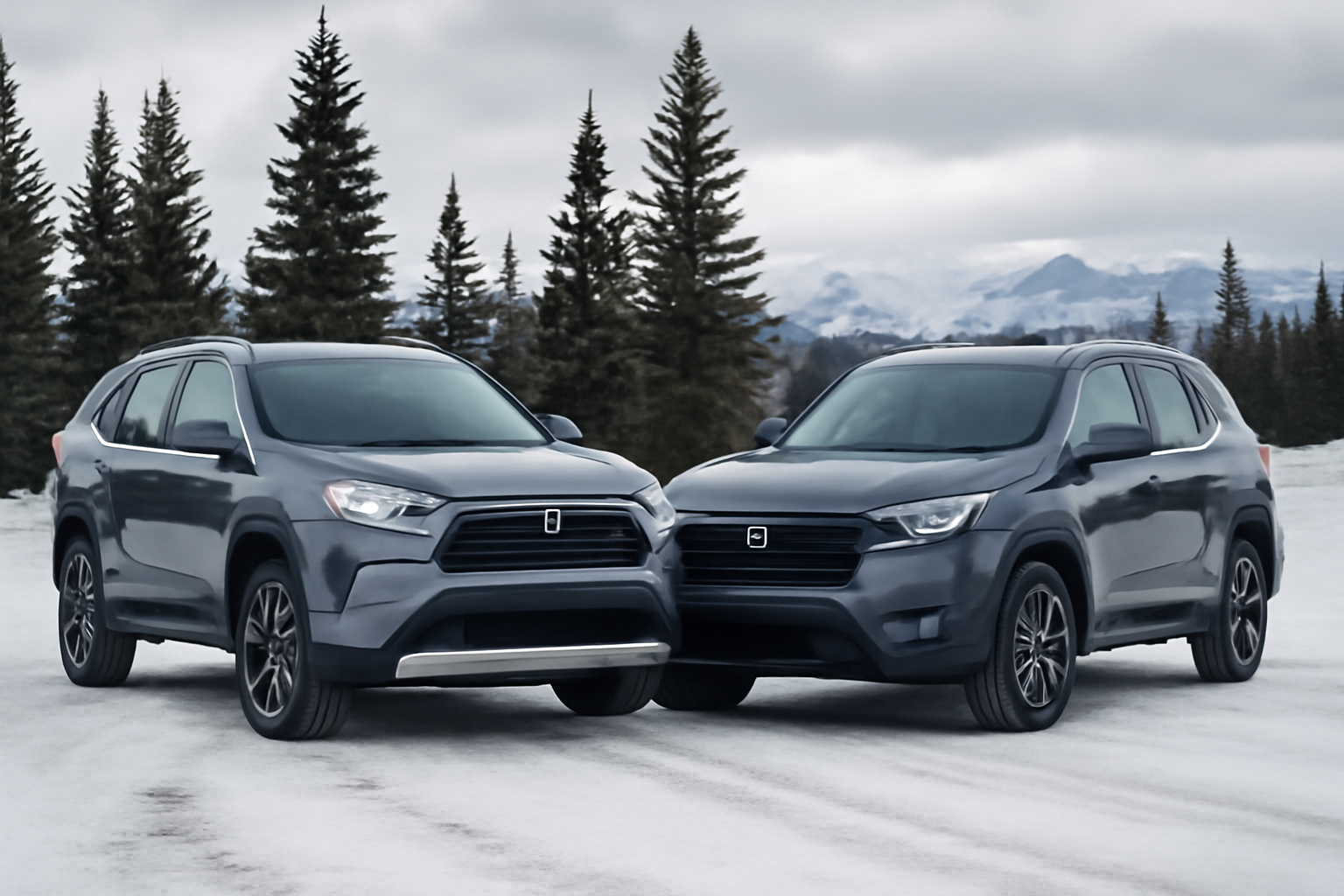
RAV4 vs CR‑V: The Alberta Buyer’s Road‑Test Verdict
RAV4 vs CR‑V: Which Compact SUV Actually Fits Alberta Life?
Picture this: it’s -28°C, your driveway is a frozen rink, and you’ve got a hockey bag, a stroller, and a week’s worth of groceries to haul. That’s a normal Tuesday in Alberta. So when the choice is Toyota RAV4 or Honda CR‑V, you’re not just picking a badge—you’re choosing how winter mornings, gravel highways, summer camping trips, and highway commutes will feel for the next 5–10 years. Let’s break it down like a friend who’s owned both and driven them through a few chinooks.
Quick Verdict for Busy Shoppers
- If you prioritize winter traction, towing, and light off‑road: The RAV4—especially Trail/TRD Off‑Road and Hybrid trims—has the edge for Alberta’s mixed terrain and weekend towing.
- If you want the calmest ride, roomy rear seats, and refined cabin: The CR‑V feels a touch more upscale day-to-day and is a family favourite for city-to-highway comfort.
- Hybrids: RAV4 Hybrid is the fuel-sipper to beat; CR‑V Hybrid is strong too, though availability can vary by trim and model year.
- Used market value: Both hold value very well in Alberta. The RAV4 often commands slightly higher resale, while the CR‑V can deliver excellent value as a gently used buy.
Powertrains and Fuel Economy (Real Alberta Use)
Toyota RAV4
- Gas: 2.5L four-cylinder, ~203 hp with an 8‑speed automatic. Expect roughly 7.8–8.5 L/100 km combined depending on winter tires, roof racks, and driving style.
- Hybrid: 2.5L + electric motors, ~219 combined hp with eCVT. Many Alberta owners report ~5.8–6.4 L/100 km year-round, a bit higher in deep winter.
- Prime (PHEV): Up to ~60 km EV-only range (ideal for short Alberta commutes) and strong power. Availability and pricing can be the challenge.
Honda CR‑V
- Gas: 1.5L turbo, ~190 hp with a CVT. Expect ~7.8–8.6 L/100 km combined; winter and higher speeds nudge the number up.
- Hybrid: Available on select trims (model-year dependent in Canada). Owners often see ~6.2–6.8 L/100 km combined.
Real-world takeaway: At 20,000 km/year and $1.55/L, moving from a gas-only compact SUV (8.4 L/100 km) to a hybrid (6.2 L/100 km) can save roughly $700–$900 annually—enough for a great set of winter tires and an oil-change budget. In prolonged cold snaps, both hybrids still excel in city driving thanks to regenerative braking and efficient warm-ups.
AWD Systems and Winter Confidence
Alberta winters aren’t just snow—they’re packed ruts, ice at intersections, and freeze-thaw cycles. Here’s how the systems stack up:
- RAV4 Gas: Available Dynamic Torque Vectoring AWD on certain trims can send power left-right across the rear axle for sharper traction on mixed surfaces.
- RAV4 Hybrid: AWD‑i uses an electric rear motor to engage quickly and smoothly from a stop—great on icy parking lots and unplowed alleys.
- CR‑V: Real Time AWD with Intelligent Control reacts predictably and is very stable in corners and highway lane changes on slick days.
Ground clearance is generous on both (roughly 200+ mm), but RAV4 Trail/TRD Off‑Road sit a bit taller and add off-road drive modes for gravel and mud. For deep snow on rural roads, that extra clearance and traction programming are noticeable.
Cabin Space, Cargo, and Road-Trip Comfort
- Rear-seat space: The CR‑V gives lanky teens more knee room and a slightly wider-feeling rear bench.
- Cargo: Both swallow over 1,000 L behind the second row. The RAV4’s cargo floor is a touch more square; the CR‑V’s load height is friendly for heavy coolers and dog crates.
- Ride & noise: The CR‑V is more car-like and settled on long QEII stretches. RAV4 feels more rugged over rougher gravel but can be firmer depending on trim and tire.
- Seating & warmth: Both offer heated seats and steering wheel on many Canadian trims—must-haves for Alberta. Look for remote start and a factory or dealer-installed block heater for -30°C starts.
Towing, Roof Racks, and Weekend Life
- RAV4: Gas models are often rated up to ~1,500 lb; Trail/TRD Off‑Road up to ~3,500 lb (great for small trailers or sleds). Hybrids typically tow ~1,500–1,750 lb; the Prime can tow more than the base gas in many cases.
- CR‑V: Commonly rated up to ~1,500 lb, which covers a small utility trailer or a couple of dirt bikes.
If small-camper towing is on your radar, the RAV4 is the safer bet. For roof gear, both handle ski boxes and bike racks well—just remember roof boxes and winter steelies will dent fuel economy.
Safety and Tech
- Driver aids: Toyota Safety Sense and Honda Sensing are standard on most trims—adaptive cruise, lane-keeping, and automatic emergency braking all help on long, windy highway drives.
- Displays & connectivity: RAV4 uses 8–10.5-inch touchscreens with wireless Apple CarPlay/Android Auto on newer years; CR‑V offers 7–9-inch units with wireless connectivity on upper trims.
- Visibility: Both have good outward visibility. Pair them with proper winter blades and -40°C washer fluid for storm days.
Reliability and Ownership Costs
Toyota and Honda are perennial reliability leaders in Alberta. Routine maintenance is straightforward on both (oil, filters, fluids, brake servicing). The RAV4 Hybrid’s eCVT and the CR‑V’s CVT are proven, but stick to the service schedule, especially fluid changes for severe conditions. For warranty, check the exact model year and trim—hybrid components usually carry extended coverage beyond the basic and powertrain plans.
New vs Used in Alberta’s Market
Whether you’re browsing the “car marketplace Alberta” scene or checking “auto sales Edmonton” results, here’s what to expect:
- New: Inventory is generally healthier than a couple of years ago, but hot trims (Hybrids, Trail/TRD Off‑Road, and CR‑V Hybrid) can still move quickly.
- Used: RAV4 and CR‑V hold value, but clean, one-owner vehicles with documented maintenance are worth the premium—especially with remote starters, winter wheel packages, and block heaters already sorted.
- Private seller cars in Alberta: Great deals appear, but do the paperwork: lien search, bill of sale, and a pre-purchase inspection.
Alberta-Specific Buying Checklist
- Winter readiness: Look for heated seats/steering wheel, remote start, block heater, and a quality winter tire set (studs are legal year-round in Alberta, though many prefer premium non‑studded winter tires for mixed ice/snow).
- Undercarriage & paint: Alberta uses sand and calcium chloride in many regions—check for chips and underbody wear, especially on used SUVs.
- Windshield: Highway gravel is tough on glass. A small chip is common; ask about recent replacements and insurance coverage for future repairs.
- Documentation: Buying used? Confirm a lien-free title (Service Alberta search), review service records, and get a third-party inspection. Out-of-province vehicles require a licensed OOP inspection before registration.
- Insurance tips: Some Alberta insurers offer winter tire discounts—worth asking before renewal.
How They Drive on Alberta Roads
Highway stability
The CR‑V’s suspension tuning shines on long, windy stretches—stable in crosswinds, with a calmer ride over expansion joints. The RAV4 is planted too, especially with torque-vectoring AWD, but can feel a touch firmer on coarse pavement.
City and ring roads
Both are easy to park and see out of. Hybrids excel in stop-and-go traffic, where regenerative braking offsets winter efficiency losses and keeps fuel bills down.
Gravel and secondary highways
This is where the RAV4’s off-road oriented trims feel at home. If hunts, trailheads, or ranch roads are part of your life, the extra ground clearance and drive modes add confidence.
Tech That Matters When It’s Cold
- Remote start & app control: Both brands offer app-based features in newer years. Warming the cabin and steering wheel for five minutes before you head out is worth it.
- Heated side mirrors & washer nozzles: Underrated game-changers for slushy shoulder seasons.
- Battery health: For used hybrids, ask about state-of-health reports if available and confirm hybrid warranty details by VIN.
Trim and Year Recommendations (Use-Case Based)
Commuter who drives 80–120 km/day
- RAV4 Hybrid XLE/XSE: Excellent economy, strong AWD‑i traction in slick parkades and side streets.
- CR‑V Hybrid Touring (model-year dependent): Quiet cabin and great driver-assist tech; check winter tire packages on used listings.
Family with strollers and car seats
- CR‑V EX-L/Touring: Big rear doors and rear-seat space make life easier. The ride is calm for sleeping kids.
- RAV4 Limited: Adds premium tech and amenities; look for a power liftgate and 360° camera on newer model years.
Outdoor weekends, light towing
- RAV4 Trail/TRD Off‑Road: Tow ratings up to 3,500 lb, terrain modes, and all-terrain tire options.
- CR‑V EX/EX-L AWD: Fine for small utility trailers and dirt roads, but keep loads modest.
Budget-friendly used buy
- 2018–2020 RAV4 or CR‑V: Strong reliability record; aim for documented maintenance, block heater, and two key fobs. If you spot a smart set of winter rims/tires in the deal, that’s a bonus.
Financing Your RAV4 or CR‑V in Alberta
Whether you’re shopping at a dealership or eyeing a private listing, having your financing sorted first keeps you in control of price and pace. You can get pre-approved in minutes, and many Alberta buyers combine that with a rate hold while they shop.
- First purchase? Ask about first time car buyer programs that can soften requirements and include education on insurance/registration costs.
- Credit speed bumps? Options like bad credit car loans can help rebuild your file as long as payments are on time and the loan fits your budget.
- Cash tight after a move or new job? Some buyers use $0 down car loans to keep emergency funds intact—just compare total interest against a small down payment.
Driving With Us Auto Market supports both NEW and USED purchases—and our open marketplace connects Alberta buyers and private sellers. If you’re comparing “vehicle marketplace Edmonton” results with other listings across the province, we can also finance private-sale transactions and handle lien payouts, so the handoff is clean and simple.
How to Shop Smart on Alberta Listings
Whether you’re browsing RAV4s and CR‑Vs through an open car marketplace or local dealer inventories, do this:
- Decode the trim and options: Not all AWD systems and safety features are equal. Confirm the exact trim (e.g., RAV4 Trail vs LE; CR‑V EX-L vs Touring) and what’s included for the year.
- Ask for cold-start videos: On private listings in winter, a cold-start video reveals battery health and idle behaviour.
- Check tires: A great set of winter tires is worth $1,000–$1,600. If the seller includes them, factor that into the price.
- Service history matters: Regular oil changes, CVT/eCVT fluid intervals, brake servicing, and cabin filter changes add up to quieter, longer-lasting ownership.
- Road test on your route: Include a fast highway section and a rough side road. Listen for rattles, feel for steering shimmy, and test driver-assist calibration.
Costs and Paperwork Unique to Alberta
- Sales tax: Alberta has no provincial sales tax; you’ll pay 5% GST on most purchases.
- AMVIC protection: Dealer purchases must follow AMVIC rules; you’ll get disclosures that private sellers aren’t required to provide.
- Lien checks: Essential for private sales—confirm the vehicle is free of liens before you hand over cash.
- Out-of-Province (OOP) inspection: Required before registering a vehicle that’s coming from outside Alberta.
- Plates and insurance: Book registry and insurance appointments ahead of time if you’re taking delivery near month-end.
Fuel, Fluids, and Winter Habits
- Fuel: Both engines are tuned for regular 87 octane. Premium not required unless the manual states otherwise.
- Fluids: Use -40°C washer fluid and replace wiper blades each fall. Hybrid owners: don’t worry about block heaters as much, but they still make cold starts easier and reduce engine wear.
- Warm-ups: Modern engines prefer driving off gently rather than long idling. Let the defroster clear, then go easy for the first few kilometres.
Which One Should You Buy?
Pick the RAV4 if towing, trail access, and the best overall winter traction are must-haves, or if you want the hybrid that typically returns the strongest fuel savings in Alberta traffic. The Prime (where available) is stellar if you can charge at home and want EV-like commuting without range anxiety.
Pick the CR‑V if you value cabin refinement, a cushier ride over long highway runs, and a class-leading back seat. The CR‑V Hybrid (trim/year dependent in Canada) is a smart commuter if your daily drive mixes ring roads and stop-and-go.
Either way, both are winners for reliability and value. Let your roads, your cargo, and your weekend plans make the call.
Next Steps for Alberta Shoppers
- Browse RAV4 and CR‑V listings across an open marketplace to compare prices, trims, and mileage side by side.
- Lock in your budget and get pre-approved so you can move fast on the right SUV.
- If you’re newer to credit or buying solo, look into first time car buyer programs or bad credit car loans before you fall in love with a specific unit.
- Short on cash after a move or reno? Consider $0 down car loans to keep your emergency fund safe—then accelerate payments once winter heating bills drop.
At Driving With Us Auto Market, we list NEW and USED vehicles and also run an open marketplace where private sellers can post their cars. We help buyers and sellers across Alberta, and we can finance both dealership and private-sale transactions with transparent terms. Whether you’re sifting through “new and used cars Edmonton” results or searching province-wide, we’ll help you compare the RAV4 and CR‑V like a pro—and drive home what fits your Alberta life best.