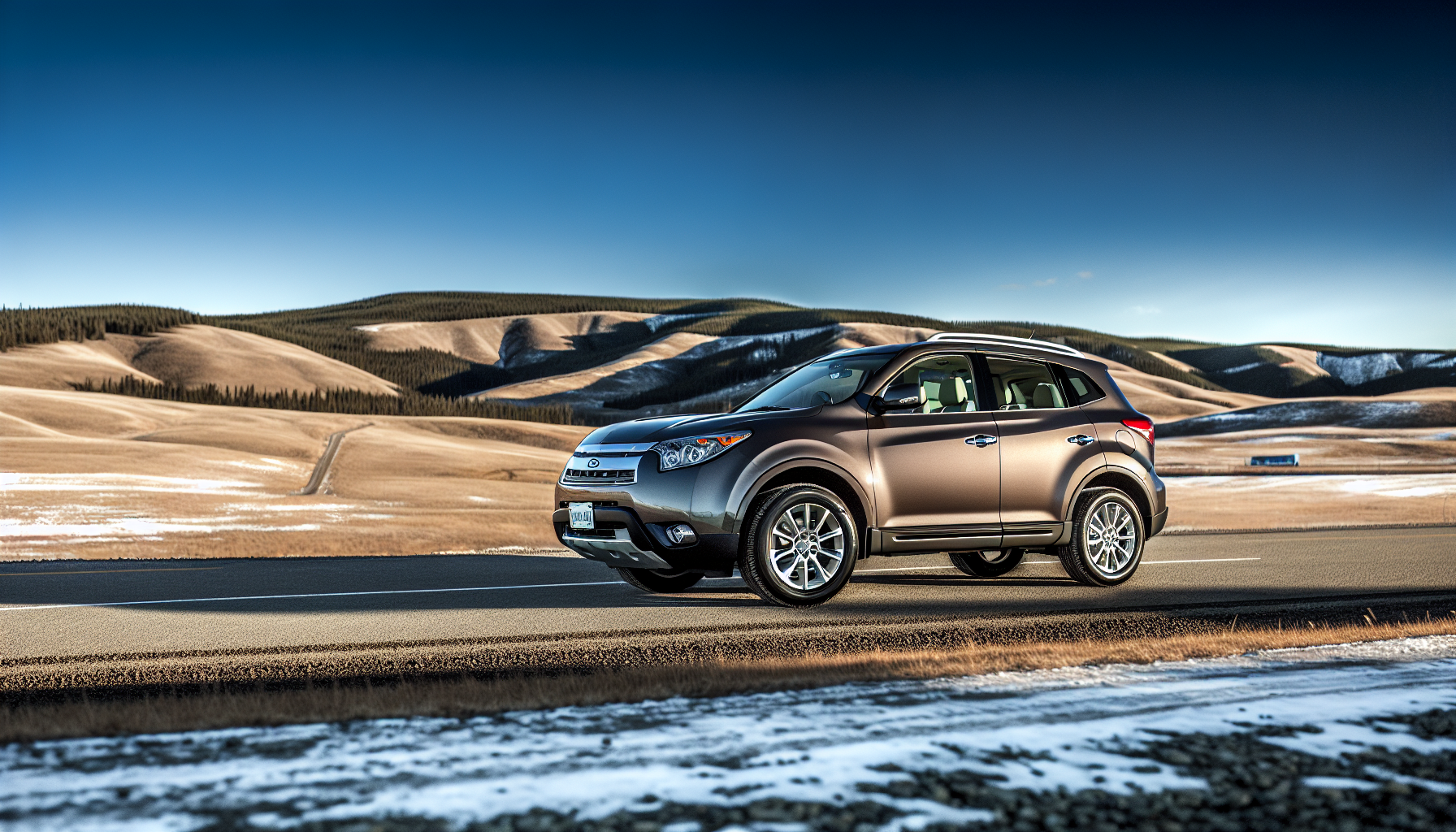
The Long-Commute Car Playbook: Comfort Meets Efficiency
Spending hours on Alberta highways? Pick a car that treats your back—and your budget—right.
If your weekday includes a long stretch of highway at 110 km/h, dark winter mornings, and the occasional moose warning sign, you know a commute in Alberta isn’t “average.” The right car turns that grind into calm, efficient travel: warm cabin, supportive seat, confident headlights, and fuel-sipping tech that still performs when it’s -25°C. Let’s walk through how to choose a commuter that nails comfort and efficiency—without getting surprised by winter or high-mileage wear.
What actually makes a great Alberta commuter?
Comfort that lasts past 60 minutes
- Seat ergonomics: Look for multi-way power adjustment (10+ ways if possible), adjustable lumbar, and tilt/telescopic steering. Memory settings are a win if two drivers share.
- Heated everything: Heated seats and a heated steering wheel are non-negotiable for many Alberta commuters. Ventilated seats are a summer bonus, especially on long prairie drives.
- Ride & noise: Softer suspension tuning, acoustic glass, and a longer wheelbase help tame expansion joints and crosswinds. Quiet cabins fight fatigue.
Winter-friendly climate control
- Remote start & block heater: In deep cold, a factory remote starter plus a block heater makes mornings easier and engines happier.
- Quick defrost: Look for strong HVAC, heated mirrors, and heated washer nozzles. Consider winter wiper blades and a windshield with built-in defrost zones.
Driver assistance that earns its keep
- Adaptive cruise control: The best systems brake and accelerate smoothly—especially useful on long, straight corridors.
- Lane centring/lane keep: Reduces micro-corrections in crosswinds. Try it at highway speeds on your test drive to check for nervous behaviour.
- Automatic high beams & great headlights: Alberta’s long winter nights make lighting a safety essential. LED projectors or matrix LEDs are worth prioritizing.
Efficiency you can feel at the pump
- Highway L/100 km ratings: For long commutes, focus on highway efficiency. Small displacement turbos, hybrids, and efficient CVTs/top-gear automatics perform well.
- Tire choice matters: Touring tires with low rolling resistance help consumption and noise. Swap to proper winter tires (3PMSF) when temperatures drop.
Powertrains for Alberta commutes: pros, cons, and cold-weather reality
Gasoline
Best for: Moderate budgets, low-maintenance simplicity, anywhere you can plug in a block heater.
Watch for: Some small turbos want premium fuel; confirm octane requirements to avoid surprise costs.
Hybrid (non-plug-in)
Best for: Mixed city/highway routes, stop-and-go traffic, excellent reliability in many models.
Winter note: Modern hybrids handle cold well, but short trips in deep cold can reduce benefits as the engine runs to warm the cabin.
Plug-in Hybrid (PHEV)
Best for: Short urban legs plus a longer highway segment; you can run errands on electric and commute on gas-hybrid. Perfect if you can plug in at home.
Winter note: Expect reduced electric range in sub-zero temperatures. Precondition the cabin while plugged in.
Diesel
Best for: Very high highway mileage and torque needs (e.g., rural grades, winter traction with low RPM).
Winter note: Ensure winterized diesel is available on your route and glow plugs/DEF systems are healthy.
Battery Electric (EV)
Best for: Consistent charging access at home/work, predictable daily kilometres, ultra-quiet comfort.
Winter note: Expect 25–40% range loss in deep cold. Look for heat pumps, battery preconditioning, a reliable fast-charging network on your route, and a robust cabin heater. Use a level 2 home charger if possible.
Real-world cost math for Alberta commuters
Let’s say you drive 80 km per day, 5 days a week, 50 weeks a year—about 20,000 km annually.
- Efficient hybrid (5.5 L/100 km): 1,100 L/year. At $1.45/L ≈ $1,595/year.
- Efficient gas sedan (7.0 L/100 km): 1,400 L/year. At $1.45/L ≈ $2,030/year.
- Compact SUV (9.5 L/100 km): 1,900 L/year. At $1.45/L ≈ $2,755/year.
That’s a difference of over $1,100 per year between a thrifty hybrid and a thirstier SUV. Over a 5-year term, the savings can offset the price premium for efficiency tech.
New vs. used: which makes sense for a long commute?
New car advantages
- Full warranty coverage for those high kilometres.
- Latest ADAS features and improved headlights.
- Better NVH (noise, vibration, harshness) tuning on newer platforms.
Used car advantages
- Lower upfront cost—even for well-equipped trims with comfort features.
- Slower depreciation on a high-mileage use case.
Alberta-focused used car checklist
Before you commit, run a thorough vehicle inspection tailored to Alberta’s conditions. Many buyers use a third-party pre-purchase inspection ($150–$300) even if buying from a dealer. If purchasing from a licensed Alberta dealer, they must provide a Mechanical Fitness Assessment (MFA) under provincial regulations.
- Windshield & chips: Expect rock chips; check for cracks near the driver’s line of sight. Repairs are cheap early, expensive late.
- Tires: Verify tread depth on both all-seasons and winter tires if included. Look for even wear (alignment). Winter tires should have the 3PMSF symbol.
- Suspension & steering: Highway commuting wears bushings, control arms, and struts. Listen for clunks on speed bumps and at 80–110 km/h.
- Brakes: Highway heat cycles and winter grit can rust rotors. Inspect thickness and look for pulsation on braking from highway speeds.
- Fluids & service history: Oil change intervals (severe service if many short winter trips), transmission services (especially CVTs/dual-clutch), and coolant.
- Battery & charging: For hybrids/EVs, ask for a battery health report. For all cars, test cold-cranking performance.
- Heat & defrost: Confirm strong heat output and quick defrost performance; test heated seats/steering.
- Block heater: Make sure it’s installed and the cord is present.
- Lighting: Night test if possible; ensure high beams, fogs, and auto high-beam assist work well.
- Out-of-province: If the car is from another province, you’ll need an Alberta Out of Province inspection before registering.
- Lien & history check: Run a lien search through the Alberta Personal Property Registry and review accident/service history.
Financing your commuter without surprises
Long commutes add kilometres fast, so build a financing plan that leaves room for maintenance, winter tires, and windshield repairs. Start with clarity on your budget and rate, then compare lenders.
- Know your range: Map payment comfort, fuel/charging cost, insurance, maintenance, and tire swaps.
- Shop your rate: Banks, credit unions, and marketplace lenders can vary. If you need a head start, you can get pre-approved before you test-drive.
- Down payment or not: If cash is tight (winter tires, registration, emergency fund), consider $0 down car loans—just watch total interest and don’t stretch terms too long.
- Credit rebuilding: If your score took a hit, explore bad credit car loans or, if needed, car loans after bankruptcy. Reliable commuting can help stabilize income and rebuild credit.
- New to Canada? Programs for newcomers can help you start commuting quickly; ask about car loans for new immigrants.
Financing tip for high-mileage drivers: shorter terms keep you ahead of depreciation. If you must go longer, choose a car known for reliability and resale, and consider extended coverage only if it’s cost-effective.
Where to shop: dealers, private sellers, and open marketplaces
Cast a wide net. Many Albertans begin with searches like “new and used cars Edmonton,” “auto sales Edmonton,” or “vehicle marketplace Edmonton,” but the best commuter often comes from browsing province-wide. At Driving With Us Auto Market, we list both new and used vehicles and run an open marketplace where private seller cars Alberta-wide sit side-by-side with dealer inventory. That means you can compare marketplace vehicles easily, filter by efficiency features, and line up financing for either type of sale.
Buying from a dealer
- Protected by Alberta’s consumer rules (AMVIC oversight) and entitled to disclosures (e.g., accident history, prior use).
- Access to certified inspections like the Mechanical Fitness Assessment.
- Easier add-ons like winter tires, extended coverage, and in-house financing.
Buying from private sellers
- Often lower prices and direct maintenance history from the owner.
- Always do a lien search and a pre-purchase inspection.
- Meet in a safe, well-lit spot. Verify ID matches the registration and bill of sale.
- Our marketplace supports private listings and can arrange financing for those transactions, too.
Shortlist: commuter-friendly models to test-drive
Use this as a starting point; always research specific model years and powertrains.
Ultra-efficient sedans and hatchbacks
- Hybrid compacts/midsize: Corolla Hybrid, Prius, Civic Hybrid (where available), Accord Hybrid, Camry Hybrid—great highway manners with stellar L/100 km.
- Gas sippers: Mazda3 (2.5 non-turbo), Hyundai Elantra, Kia Forte, Toyota Corolla—look for long top gears and quiet cabins.
Comfort-first crossovers
- Small hybrid SUVs: RAV4 Hybrid, CR-V Hybrid, Tucson Hybrid—more ride height without huge fuel penalties.
- Quiet, comfy gas SUVs: Subaru Forester, Honda HR-V/CR-V, Toyota Venza—prioritize trims with acoustic glass and advanced cruise.
PHEVs for split city/highway life
- RAV4 Prime, Mitsubishi Outlander PHEV, Hyundai Tucson PHEV—excellent if you can charge at home and still need weekend range.
EVs that handle winter with grace
- Hyundai Ioniq 5/6, Kia EV6, Tesla Model 3/Y, Volkswagen ID.4—seek heat pumps, robust preconditioning, and reliable fast-charger access.
Test-drive checklist for long Alberta commutes
Bring your daily routine to the test drive: the thermos, the laptop bag, your winter coat. Then:
- Highway run: Spend at least 15 minutes at 100–110 km/h. Check wind noise, lane-keep smoothness, and passing power.
- Seat test: Adjust multiple times. If your back isn’t happy after 30 minutes, keep shopping.
- Adaptive cruise: Verify smooth following, predictable braking, and gentle acceleration.
- Headlight check: Dusk or night if possible. Are low beams bright enough without glare? Do auto high beams react quickly?
- Climate reality: From a cold start, time how long it takes to get heat and defrost. Try all defog/defrost settings.
- Tech & connectivity: Test wireless CarPlay/Android Auto, call quality at speed, and the layout of steering-wheel controls.
- Brakes & stability: Light to moderate braking from highway speeds; does it stay straight and composed?
Alberta ownership tips: stay comfy and efficient year-round
- Winter tires: Install when temps consistently stay below 7°C. The 3PMSF logo beats M+S in snow and cold.
- Block heater routine: 2–3 hours before departure is often enough; use a timer to save power.
- Windshield care: Fix chips early, use winter washer fluid, and consider a windshield protection film if your route is gravel-prone.
- Maintenance for severe service: Follow severe-schedule oil changes if you do many short winter trips; check CVT fluid intervals if applicable.
- Keep it light: Remove winter cargo you don’t need (sandbags, roof racks) to save fuel year-round.
- Driving habits: Smooth throttle, early upshifts (in manuals), and consistent speeds pay off at the pump.
Paperwork and protection in Alberta
- Bill of sale: Include VIN, odometer, names/addresses, price, and signatures.
- Lien checks: Use the Alberta Personal Property Registry before you buy—especially with private sellers.
- Insurance & registration: Line up insurance before pickup; if the car’s from out of province, schedule your Out of Province inspection early.
- Disclosures: Licensed dealers must disclose prior damage, flood/salvage status, and previous use (rental, taxi, etc.).
Bringing it all together
Your ideal Alberta commuter blends a quiet, supportive cabin with features that shrug off winter: heated seats and wheel, strong defrost, quality headlights, and driver assists that reduce fatigue. Pair that comfort with the right powertrain—often a hybrid or efficient gas engine—for real savings at 20,000+ km per year.
When you’re ready to shop, browse across Alberta rather than limiting your search radius. Driving With Us Auto Market offers both dealership inventory and private seller listings in an open environment, and we can arrange financing whether you buy on the lot or from a private owner. For a head start, you can get pre-approved, explore $0 down car loans, check options for bad credit car loans, or review car loans for new immigrants. Use this car buying guide to compare comfort, efficiency, and year-round practicality—and make every kilometre feel easier.